About Hurricanes
About Hurricanes - how they work, how to prepare for one, and how they've affected Cape Coral.
Hurricane season officially lasts from June 1 - November 30.
Most hurricanes and tropical storms in Florida tend to occur in August and September.
As the hurricane moves across the ocean, it sucks in warm, moist air from the bottom while expelling cool air out of the top.
Surface temperature of Gulf waters needs to be 82 degrees for a hurricane to develop. It gathers intensity until it makes landfall, where it then loses power. But how do hurricanes impact people and buildings, and what can Cape Coral residents expect when a storm hits?
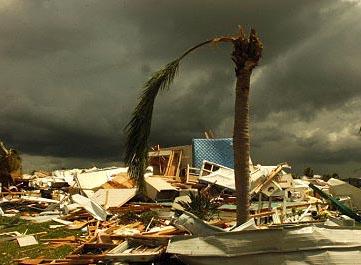
Hurricane Categories
One thing that is very important to understand about hurricanes is their category.
That will help you to determine whether to put up your hurricane shutters or not, ride out the storm, or evacuate.
- Category 1 - Winds: 74-95 mph(64-82 kt) Surge: 4-5 ft
No real damage to building structures. Damage primarily to unanchored mobile homes, shrubbery, and trees. Also, some coastal flooding and minor pier damage. - Category 2 - Winds: 96-110 mph(83-95 kt) Surge: 6-8 ft
Some roofing material, door, and window damage. Considerable damage to vegetation, mobile homes, etc. Flooding damages piers and small craft in unprotected moorings may break their moorings. - Category 3 - Winds: 111-130 mph(96-113 kt) Surge: 9-12 ft
Some structural damage to small residences and utility buildings, with a minor amount of curtain-wall failures. Mobile homes are destroyed. Flooding near the coast destroys smaller structures with larger structures damaged by floating debris. Terrain may be flooded well inland. - Category 4 - Winds: 131-155 mph(114-135 kt) Surge: 13-18 ft
More extensive curtain-wall failures with some complete roof structure failure on small residences. Major erosion of beach areas. Terrain may be flooded well inland. - Category 5 - Winds: 155 mph+(135+ kt) Surge: 18 ft +
Complete roof failure on many residences and industrial buildings. Some complete building failures with small utility buildings blown over or away. Flooding causes major damage to lower floors of all structures near the shoreline. Massive evacuation of residential areas may be required.
Cape Coral has a high-speed, telephone emergency notification service that you can sign up for online called CodeRED, This emergency system has the ability to deliver a prerecorded message about hurricane's evacuation advisories or evacuation orders at a rate of up to 60,000 calls per hour.
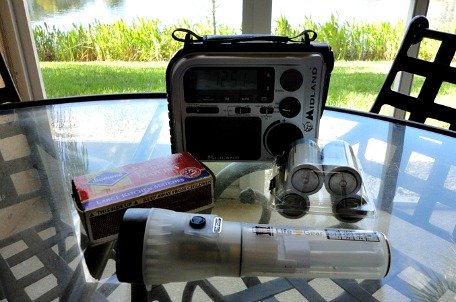
Because of possible power loss, it is important that you have a battery-operated radio or TV, and an old fashioned phone that doesn't require electricity.
If you prefer, you can sign up for CodeRED by calling (239)242-3901.
Flooding
Damaging wind is one thing about hurricanes, flooding is quite another. Flooding can occur from heavy rains and storm surge.
It's important to know the elevation of your property and where you are in Cape Coral's flood zones.
Generally, if you live within a mile or 2 of the water that surrounds the Cape, either the Caloosahatchee River or Matlacha Pass, you're in a flood zone. Go to this website to see a map of Lee County Flood Zones.
Cape Coral has not had problems with flooding of properties at least 15' above sea level, though that doesn't necessarily mean flooding of higher properties can't happen in the future. To check the height above sea level of your property, go to VeloRoutes. Punch in your town first, then street address in the window. They will also tell you the GPS coordinates of your property.
If a hurricane is threatening and they are predicting a category where the surge is higher than your property is, you will need to evacuate.
The city has evacuation routes posted and shelters for those who need a safe place to stay. To find out what to do about hurricanes, get more info on evacuation routes and shelters, and to get a Lee County All Hazards Guide go to the Lee County Emergency Operations Center.
To get sand bags for Lee County residents, go to one of these locations ....... bring your own shovel:
North Fort Myers: Bayshore, 17350 Nalle Rd
Fort Myers: South Trail (sand bags only), 13500 Sophomore Lane
Estero: 21510 Three Oaks Pkwy
San Carlos: 8013 Sanibel Blvd
Fort Myers Beach: Near Tops Supermarket, 2545 Estero Blvd
Bonita Station 4: 27701 Bonita Grande Dr
Ft Myers Residents Only: Self-serve sand and bags available under the FMFD Red tent in front of old SWFL History Museum between Jackson and Central Ave.
Preparing for a Hurricane
A hurricane watch means a hurricane is possible within 36 hours. This is the time to prepare your home and family, because it might be too late once a hurricane warning has been issued.
A hurricane warning means that a hurricane is expected within 24 hours and sustained winds have reached 74+ mph.
Even though Southwest Florida has not been hit as often or as hard as other areas, our city's policy about hurricanes is to plan for the worst and hope for the best.
You can make a kit to have on hand at the beginning of the season.
I keep many of these items in a plastic container, ready-to-go for just in case.
Hurricane Survival Kit Items:
- Enough food and one gallon of water per person per day, for 3 days ...... 7 days is even better! Bleach and medicine dropper - dilute 1 part plain bleach in 9 parts water for a disinfectant, or 16 parts bleach in 1 gallon of water to treat drinking water during an emergency.
- Flashlight, batteries, hand-cranked or battery-operated radio, for NOAA weather alerts about hurricanes from the National Oceanic Atmospheric Administration.
- Moist towelettes, garbage bags, first aid kit, can opener, pliers, duct tape, plastic sheeting.
Other Items:
- Cash, important documents, first aid book.
- Extra clothes, blankets or sleeping bags, mess kits, matches in waterproof container.
- Paper and pencils, books, games, puzzles and activities for children.
- Pet supplies, diapers and other things for baby, feminine and personal hygiene items.
If you evacuate and you want to know whether your food is safe after the power goes out, you can put some ice in a bowl, put a penny on top of the ice, and put it in your freezer. When you return home, if the penny sinks all the way down, you need to throw out your food from fridge and freezer. If the penny sinks about halfway down the ice, you should be able to keep your food.
Never leave pets outside during a storm. Keep small pets like birds and hamsters separated from cats and dogs, and separate cats and dogs, even if they are friends. Keep dangerous pets like snakes secured in crates or cages.
Cape Coral Shelters:
- Diplomat Elementary - 1115 NE 16th Terrace
- Diplomat Middle School - 1039 NE 16th Terrace
- Island Coast High School - 2125 DeNavarra Parkway
- Mariner Middle School - 425 Chiquita Blvd
Our area's pet-friendly shelter is at South Ft Myers High School, 14020 Plantation Rd.
They are only for clean and healthy dogs and cats, and residents of Lee County.
Lee County Animal Services manages this shelter. Pets are sheltered in a different section from owners.
You'll need a cage, collar and leash, their food, water, medications, your pet's medical records and ID tags. You must shelter with your pet there and will be responsible to feed, care, and exercise your pet.
If you evacuate, check for pet-friendly hotels in the location you are evacuating to.
You may want to buy a generator in case your power goes out. You must NEVER put an operating generator inside your house or even your garage because of the dangerous fumes.
Depending on the size and output of the generator, you're not going to able to run everything in your house ........ lights, a/c, fridge, etc. You'll have to prioritize which items you want to run.
Generators use gas to operate and if you run out of it during use and there's no gas available to buy after the hurricane, you're out of luck. Plan ahead to have enough, or plan to run the generator for only a few hours a day.
LCEC provides a connection from your electric meter to your generator called GenerLink, installed by a certified LCEC technician. It's easy and safe, detects operation and automatically disconnects from the grid, no extension cords are necessary, allows the use of any appliance up to the capacity of your generator.
Read about Generator Safety on LCEC's website.
One of the difficulties about hurricanes is deciding on whether to evacuate or stay, to evacuate locally to a shelter, evacuate within the area or out of the area to friends or family, or to drive or fly out.
Whichever you decide, there will probably be hassles and difficulties especially since hurricanes are notorious for changing their path at the last minute.
With 2017's Hurricane Irma, the initial projected landfall was for near Miami and then a path up the east coast of Florida.
But it ended up going further west, and a mandatory evacuation for Cape Coral was called the day before the storm was supposed to hit due to a possibility of an 8-12' storm surge.
Many Cape Coral residents stayed home or went to shelters because it was too late to leave. Airports were closed and trips up I-75 were taking 19 hours to get out of state rather than 5-6 hours. Fortunately, the storm downgraded and there was no high storm surge.
Each hurricane is different and each situation is different. I've heard people who evacuated and wished they'd stayed home, and people who stayed home and wished they'd evacuated.
Stay Home
- Pros - If storm isn't dangerous, can have relative comforts of home, save costs of evacuation. At home to deal with damage immediately.
- Cons - If storm is dangerous, can lose life from falling trees or roof, and from high storm surge. If storm isn't dangerous, can suffer discomfort from loss of power, and no food, water, supplies or flooding.
Shelter
- Pros - For last minute mandatory evacuation and you're not comfortable staying at home, if you live in a mobile home, you can't travel. Save costs of traveling out of the area for evacuation. near home to deal with damage almost immediately.
- Cons - Sleeping on the floor unless you bring bedding, may have loss of privacy and loss of sleep, may have loss of power with accompanying discomfort. May not be allowed to leave shelter until storm had passed.
Evacuate
- Pros - Can get completely out of the path of the storm the farther you get away. If you leave immediately, can pay lower flight costs, have a better choice of hotels as long as you are not in the storm's path, will not get stuck in traffic on I-75. Can have comforts of hotel with power, water, and food.
- Cons - The longer you wait, the more you'll pay for flights, the longer it'll take to drive out of the way. You will not be home to access damage. If you have flooding or roof damage, mold damage can worsen the longer it takes for you to get home. The sooner you come back, you may encounter traffic jams on the highway, no gas, no power at home.
Please scroll down to read more pertinent information under Hurricane Irma about these different options.
Memorable Cape Coral Hurricanes
Back in 1926, before hurricanes were named, a bad storm passed through and completely wiped out the bridge into Matlacha.
The bridge had been in Alva, but was taken out and floated downriver when Alva needed a bigger bridge to accommodate increasing traffic.
Workers had just finished attaching the bridge to one side when the hurricane struck and sank it.
You can read more about what happened by if you get my free ebook, Weird Cape Coral, which you get when you sign up for my newsletter Gator Bites.
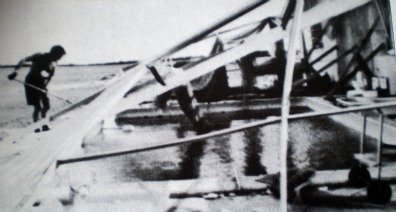
Hurricane Donna hit Cape Coral in 1960 with winds of 121mph and caused some of damage to the 2 year-old community.
A school bus took some residents to shelters in Ft. Myers. The rest hunkered down at the Surfside Restaurant and Nautilus Motel.
During the storm, residents at the motel kept their spirits up with a rousing sing-a-long around the piano.
Five homes had serious damage and the company promised to rebuild for everyone who lost a house, even those who didn't have insurance. No one was injured.
The developers went out of their way to make repairs quickly and allowed homeless residents to stay at the Nautilus. They fed everyone for free for the first 3 days.
They lost 30 roofs, and so another good thing that came out of Donna was a change in the way the roofs were constructed and a tightening of building codes to make homes safer.
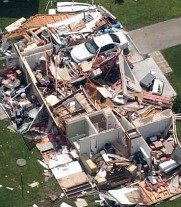
In 2004, Hurricane Charley was predicted to head up through the Tampa area, but the category 4 storm came through Sanibel, Punta Gorda, and Cape Coral instead.
There was significant wind damage, trees down, pool cages ripped out, and power outages.
Again, building codes were changed in 2006, with requirements to strengthen roofs, pool cages, garage doors. All new homes were required to have hurricane shutters for windows and glass doors.
In 2010, the codes were made stricter for the shutters, to take in consideration the negative air pressure that builds up in a structure when windows become broken. The pressure can cause roofs to collapse.
Go to my page about tips on Hurricane Shutters to find out what I've learned about them and also what I recommend.
Wilma, a category 3 hurricane hit in 2005. The eye of the storm went over Marco Island, winds were clocked at 125mph, and several homes burned to the ground in Cape Coral.
Hurricane Gustav hit in 2008 and was only a minor storm.
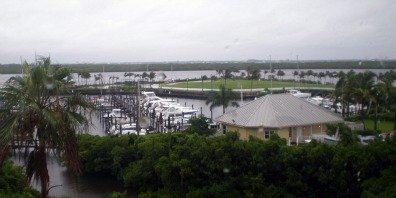
In 2012, Tropical Storm Isaac was not much of a problem either.
For more tracking information about hurricanes and tropical storms, go to Wunderground.
Hurricane Irma
On September 10, 2017 ........ Hurricane Irma made landfall for the first time on the Florida Keys, and for the second time on Marco Island, then passed through Southwest Florida as a Category 3, then a Category 2.
The highest wind gusts of the storm were 134mph in Naples. Sustained winds were around 20-40mph. The area had just recovered from recent flooding caused by Hurricane Harvey, known mainly for the devastation it caused in Texas.
Area stores ran out of water, bread, dog food, plywood, gas, batteries, and other supplies as residents prepared for the storm, everyone was affected in some way by this storm.
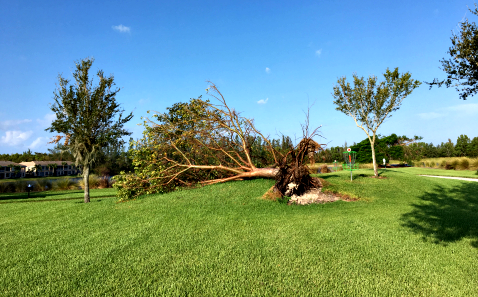
The hardest hit areas were Lehigh Acres, Bonita Springs, and Immokalee. People lost homes, experienced flooding in their homes ..... up to 3' in homes near the Imperial River in Bonita, and suffered wind damage.
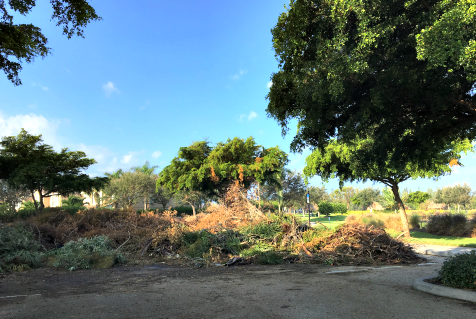
Trees, telephone, and power lines were knocked down or blown to a leaning slant from the storm, lanai screens and frames were blown apart. Debris piled up and awaited collection for weeks. Sea walls of homes on canals collapsed with the possibility of homes sliding into the water and repair costs of up to $50,000 not covered by homeowners insurance.
I happened to be in Asheville, NC visiting my daughter and granddaughters and ended up staying for 3 weeks instead of 1 ..... so I missed all the craziness before, during, and after Irma.
I've heard so many interesting stories from friends who went through Hurricane Irma. While I was in Asheville, I kept running into evacuees from all over Florida and heard their stories as well.
Here are some major points from these stories to help you make future decisions regarding going through the next hurricane:
- I have friends that live in Ocala who rescued and took in Cape Coral friends who evacuated, ran out of gas, and had to abandon their cars on I-75.
- A woman who evacuated to a hotel on Marco Island from Miami, ended up driving mid state and slept in her car, because her hotel on Marco shut down.
- Friends in Lehigh had to go by boat on their street to meet up with neighbors who brought in supplies by monster truck.
- I know people who went to a school shelter ....... it lost power, toilets backed up, and people went to the bathroom in the hallways. Things got stolen out of the school, and dry erase boards were ruined with regular markers. Those cleaning up the schools had to put on hazmat suits to clean up the mess so children could safely return to school. The school system may decide not to be shelters in the future.
- A family picked up their elderly mother from a senior care facility, drove 20 hours through the "parking lot" of I-75 to the Florida Panhandle, then ended up driving to Arkansas to escape Irma as it veered west. The senior facility lost power for only 24 hours and would've been a better situation for their mom.
- Airlines were charging $1200-$1600 for a flight out of Florida before the hurricane.
- My older daughter tried to find a hotel in Asheville to evacuate to but they were already all booked up 5 days before Irma.
- After the hurricane, contractors and insurance companies are slammed and not calling back. That also goes for airlines too, it took me a week to hear from my airline after leaving them a message to contact me and finally get a flight back home.
- Price gouging for screen and building materials, skimmers on gas pumps, and looting were some of the problems that occurred after Irma.
A Final Word
When you return to your home after a storm:
- Beware of loose or downed power lines.
- Wear protective clothing.
- Call the fire department if you smell gas or hear hissing from gas lines, leave immediately.
- Look for foundation cracks on your house.
- Avoid standing water ...... it may have snakes, gators, and sewage in it.
- You may need to boil water and throw away food.
- Throw away anything that has been touched by flood waters.
If your home becomes damaged from a hurricane or severe storm, be careful about getting ripped off from shady contractors looking to take advantage of your situation.
Because there may be an extended waiting time to get your house worked on since there will likely be many homeowners needing similar repair work, it may be easy to fall prey to fraudulent contractors that show up at your door for work.
Also, be very wary of AOB (Assignment of Benefits) Contracts. Although not all AOB contracts are suspect, AOB fraud is on the rise each year in Florida.
An AOB is a contract between you and a third party such as a contractor, roofer, pool or lanai screen company, etc. When you sign an AOB, you give the third-party vendor the right to deal directly with your homeowners insurance carrier and therefore receive payment for your claim. Basically, you give the third party total control over the reporting of your claim as well as negotiation of payment while giving up your rights to manage your claim.
Here are some red flags:
- Someone knocks on your door and tells you there is damage you didn’t know about.
- You’re promised something for nothing, such as a free roof or kitchen renovation.
- Someone claims the damage is greater than it clearly is.
- Permanent repairs begin before your insurance company is notified or allowed to inspect damages.
Instead, contact your insurance company immediately so they can send out certified professionals for properly documented inspections, timely repairs, and agents that will insure your complete satisfaction.
Hire only licensed contractors, ask them to show you their license before you sign anything or begin work.
Related Pages to About Hurricanes
Return to Come-to-Cape-Coral Home Page from About Hurricanes